
Tech
Messonde: What This German Engineering Term Actually Means

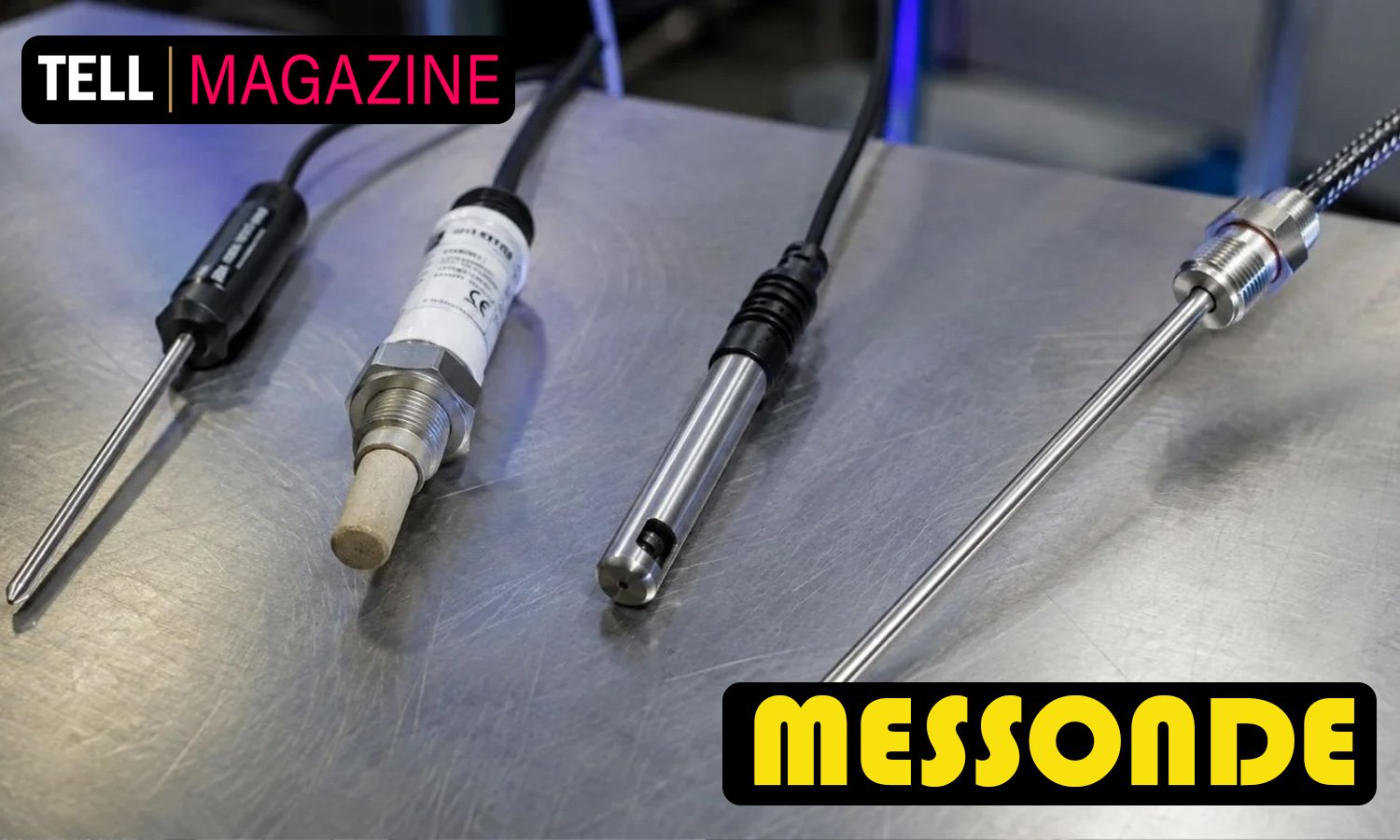
Messonde, more precisely spelled “Messsonde” in standard German, is a compound technical term combining “Messen,” meaning to measure, with “Sonde,” meaning probe, referring to a physical measuring probe or sensor probe used across engineering, environmental monitoring, and scientific measurement applications. German technical dictionaries and established measurement technology sources confirm this as a genuine, actively used engineering term rather than a manufactured or invented concept, even though some secondary articles frame it as a mysterious term with multiple competing, less precise meanings. This article explains what a Messsonde actually is, where the term is used in practice, and how it fits into the broader field of measurement technology.
What Does Messonde Mean?
Messonde, correctly spelled Messsonde in standard German, refers to a measuring probe, a physical sensor device inserted into or positioned within an environment, material, or system to take a specific measurement, such as temperature, radiation, pressure, or chemical composition. The term follows a standard German compounding pattern, joining “Mess,” the stem of “messen” (to measure), with “Sonde” (probe), a pattern common throughout German technical and scientific vocabulary for naming measurement instruments by combining what they measure with the general term for a sensing device.
What Types of Measuring Probes Does the Term Messonde Cover?
The term Messsonde applies broadly across several distinct categories of measurement technology, unified by the shared function of physically sensing and reporting a specific environmental or material property.
Radiation Measurement Probes
Radiation protection agencies use dedicated Messsonde devices to continuously monitor ambient radiation dose rates, a critical safety application documented by official radiation protection information sources that explain how these probes are constructed and maintained for accurate, ongoing environmental monitoring.
Industrial and Process Measurement Probes
In industrial and manufacturing contexts, Messsonde devices measure properties like temperature, pressure, flow rate, or chemical concentration within a production process, providing the real-time data needed for process control and quality assurance across manufacturing operations.
Smart and Connected Measuring Probes
Modern measurement technology companies have developed increasingly sophisticated “intelligent” Messsonde devices that combine traditional sensing functions with digital connectivity, allowing measurement data to be transmitted, logged, and analyzed automatically rather than requiring manual reading and recording.
Why Do Some Sources Describe Messonde as Having Multiple, Different Meanings?
Because Messsonde is a general compound term describing any measuring probe rather than one single, specific device, it naturally applies across many different fields and applications, from radiation safety to industrial process control to environmental science. Some secondary articles frame this breadth as though the term carries multiple, separate, competing meanings requiring clarification, when the more accurate framing is simply that “measuring probe” is a broad functional category applied consistently across whichever specific measurement application is being discussed, similar to how the English term “sensor” applies across an equally broad range of contexts without each application representing a fundamentally different meaning of the word.
Where Is the Term Messonde Used in Practice?
Messsonde appears throughout German-language technical, scientific, and industrial documentation wherever a physical measuring probe is being discussed or specified.
Environmental and Radiation Monitoring
German radiation protection authorities and environmental monitoring networks use the term specifically to describe the probes deployed at monitoring stations to track ambient radiation levels continuously, part of a broader national environmental safety monitoring infrastructure.
Manufacturing and Process Engineering
Industrial measurement technology companies use Messsonde in product documentation and technical specifications when describing probes designed for temperature, pressure, or flow measurement within manufacturing and process engineering equipment.
Scientific and Laboratory Applications
Research and laboratory settings also use Messsonde to describe specialized probes designed for precise scientific measurement, particularly in fields requiring continuous or automated data collection rather than one-off manual readings.
How Does a Messsonde Differ From Other Types of Sensors?
While “Sonde” broadly translates to “probe” and can describe various sensing devices, the “Mess” prefix specifically emphasizes the measurement function, distinguishing a Messsonde from other types of probes that might serve different primary functions, such as a diagnostic probe used to detect a condition rather than to produce a specific quantitative measurement. This linguistic precision reflects a broader pattern in German technical vocabulary, where compound terms are built specifically to convey a device’s precise function rather than relying on a single generic word for multiple related but distinct types of equipment.
Why Does Accurate Terminology Matter in Measurement Technology?
Precise terminology matters significantly in engineering and scientific contexts, where a device’s exact function needs to be communicated clearly across technical documentation, safety protocols, and international collaboration. A Messsonde specifically implies a device built and calibrated for taking a specific measurement, carrying expectations around accuracy, calibration standards, and appropriate use that a more generic term might not convey as clearly. This precision becomes especially important in safety-critical applications like radiation monitoring, where miscommunication about a device’s measurement function and reliability could have serious consequences.
How Should You Evaluate Content Describing Technical Terms Like Messonde?
When researching a technical term from another language, a few verification steps help distinguish accurate technical explanation from inflated or confused secondary content.
Check the Term Against the Correct Spelling and Established Technical Dictionaries
Verifying a foreign technical term against its correctly spelled form and established technical or general dictionaries in its original language, as done here with “Messsonde” rather than the less standard “Messonde,” clarifies the term’s actual, documented meaning.
Look for Usage in Genuine Technical and Industry Sources
Genuine technical terms appear consistently in real product documentation, industry publications, and official regulatory or scientific sources, which Messsonde does across radiation protection, industrial measurement, and scientific instrumentation contexts.
Be Skeptical of Framing That Treats a General Term as Having Competing “Meanings”
A broad functional term applied across multiple fields, as Messsonde is across radiation monitoring and industrial measurement, is not the same as a term with genuinely competing or contradictory definitions, and content framing ordinary breadth of application as mysterious multiplicity often signals a lack of genuine technical understanding of the term.
How Do Radiation Monitoring Networks Rely on Messsonde Technology?
National radiation protection systems, such as those operated by German federal environmental and radiation safety authorities, rely on networks of fixed Messsonde installations positioned across the country to provide continuous, real-time monitoring of ambient radiation dose rates. These networks serve a critical early-warning function, since a sudden, unexpected increase in measured radiation at any monitoring point can trigger further investigation and, if necessary, public safety responses. The technical reliability of each individual Messsonde in such a network matters enormously, since the entire system’s value depends on consistent, accurately calibrated readings across potentially hundreds of monitoring points feeding into a centralized data collection and analysis system, which is why radiation protection agencies publish detailed technical documentation on how these probes are constructed, calibrated, and maintained over their operational lifespan.
How Has Messsonde Technology Evolved With Digital Connectivity?
Traditional Messsonde devices required manual reading or a physically connected data logger to record measurements over time, limiting how quickly and widely measurement data could be shared or analyzed. Modern “intelligent” measuring probes have increasingly integrated wireless connectivity, allowing measurement data to be transmitted automatically to centralized monitoring systems, analyzed in real time, and made accessible remotely without requiring someone to physically visit each individual probe location. This evolution mirrors a broader trend across industrial and environmental measurement technology generally, where the integration of digital connectivity and automated data processing has significantly expanded what continuous, large-scale measurement networks can practically achieve compared to earlier generations of standalone, manually read measuring instruments.
What Should Engineers and Buyers Look for When Selecting a Measuring Probe?
Anyone specifying or purchasing a Messsonde for an industrial, environmental, or scientific application benefits from evaluating a few key technical factors specific to their intended use case. The probe’s measurement range and accuracy specifications need to match the actual conditions it will be measuring, since a probe calibrated for a narrow range will produce unreliable readings if deployed in an environment exceeding that range. The probe’s durability and resistance to the specific environmental conditions it will face, whether extreme temperatures, corrosive chemicals, or continuous outdoor exposure, determines how reliably it will perform over its expected operational lifespan without requiring premature replacement. Finally, compatibility with existing data collection and monitoring infrastructure, particularly for modern connected probes, ensures that a new Messsonde integrates smoothly into a broader measurement and monitoring system rather than requiring a separate, incompatible data collection process.
Why Does the German Compounding Pattern Make Technical Terms Like Messonde Easier to Understand?
German’s tendency to build precise technical vocabulary through compound words, joining “Mess” and “Sonde” to create “Messsonde,” actually offers a practical advantage once the underlying pattern is understood: the meaning of a new, unfamiliar compound term can often be deduced directly from its component parts rather than requiring a completely separate vocabulary word to be memorized. This same pattern appears throughout German technical and scientific terminology, where compound words efficiently convey precise, specific meanings by combining more basic root words, in contrast to English, which more often relies on borrowing entirely separate words, frequently from Latin or Greek roots, to name similarly specific technical concepts. Recognizing this pattern helps English speakers working with German technical documentation approach unfamiliar compound terms more confidently, breaking them down into recognizable component parts rather than treating each new term as an entirely separate vocabulary item to memorize from scratch.
Conclusion
Messonde, correctly spelled Messsonde in German, is a genuine technical term meaning “measuring probe,” combining “Messen” (to measure) with “Sonde” (probe), used consistently across radiation monitoring, industrial process engineering, and scientific measurement applications. Its broad use across these different fields reflects the general, functional nature of the term rather than multiple competing definitions requiring separate clarification. Readers encountering this term in a German technical or scientific context can understand it straightforwardly as referring to a physical device built to take a specific measurement, regardless of which particular field or application it appears in.
Frequently Asked Questions
What does Messonde mean?
Messonde, more precisely spelled Messsonde, is German for “measuring probe,” a physical sensor device used to take a specific measurement such as radiation level, temperature, or pressure.
Is Messonde a real technical term?
Yes. Messsonde is confirmed by established German technical dictionaries and appears consistently in radiation protection, industrial measurement, and scientific instrumentation documentation.
What is the correct spelling of this term?
The standard German spelling is “Messsonde,” with a double “s” reflecting the combination of “Mess” (measuring) and “Sonde” (probe), though “Messonde” appears in some less precise secondary sources.
Does Messonde refer to one specific device?
No. It is a general functional term applying to any measuring probe, used across different fields including radiation monitoring, industrial process engineering, and scientific research.
Why do some articles describe Messonde as having multiple meanings?
This framing reflects the term’s broad functional application across different fields rather than genuinely separate or competing definitions, similar to how a general term like “sensor” applies across many unrelated contexts in English.


Who Was Vivian Ridge? The Devoted Life Story of Bob Ross’s First Wife

Who Is Elaine Starchuk? The Resilient Life Story of Tommy Lee’s First Wife

Who Is Donna Joan Shaffer-Ackles? The Devoted Life Story of Jensen Ackles’s Mother

Who Is William Lancelot Bowles Jr.? The Intriguing Untold Tale of Phylicia Rashad’s Ex-Husband

The Inspiring Story of Kelly Davis Rucker: From Struggle to Success

Voozon.com Review: Is It Legit? Features, Benefits, and What to Know
-
 Celebrity3 months ago
Who Is William Lancelot Bowles Jr.? The Intriguing Untold Tale of Phylicia Rashad’s Ex-Husband
-
 Celebrity3 months ago
The Inspiring Story of Kelly Davis Rucker: From Struggle to Success
-
 Technology3 weeks ago
Voozon.com Review: Is It Legit? Features, Benefits, and What to Know
-

 Celebrity3 months ago
Who Is Ella Sofia Gordon? The Incredible Story Behind Jeff Gordon’s Daughter
-

 Celebrity2 months ago
Who Is Chanelle Haynes? The Fascinating True Story of Cornell Haynes III’s Sister
-

 Celebrity3 months ago
Who Is Iona McKidd? The Hidden Brilliance of Kevin McKidd’s Daughter
-

 Celebrity3 months ago
Who Is Simone Cruickshank Rivera? The Inspiring Journey of Geraldo Rivera’s Daughter
-

 Business3 weeks ago
UploadArticle.com Review: Is It the Best Free Platform to Upload Articles?