
Technology
What Glaadvoice Com Really Is and Who Stands Behind It

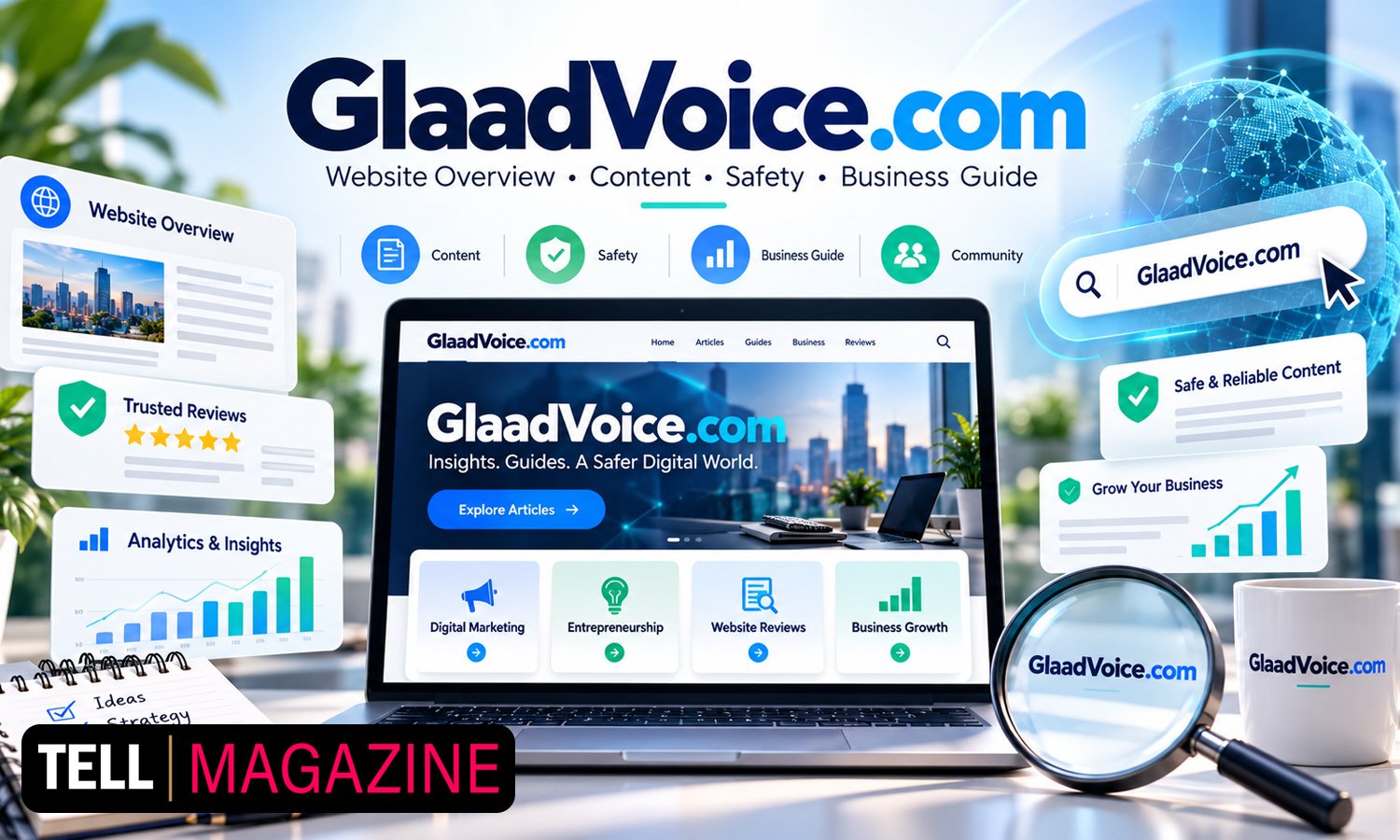
Glaadvoice.com is a real, operating website, but it is a general-interest blog and small business resource site with hidden ownership, not a branch of the well-known LGBTQ+ media organization whose name its domain resembles. Independent write-ups describe a multi-niche publication, while the live homepage now presents business guides and free calculators, so readers should treat any single description of the site with some care. This article explains what the site publishes, what its safety signals show, and how to judge a low-profile site like it.
The Name Behind the Domain
The domain name echoes the name of GLAAD, the long-established media monitoring organization, and many searchers land on glaadvoice.com expecting advocacy reporting. No evidence connects the site to that organization. The overlap appears to be a resemblance in the domain name rather than any affiliation, partnership, or shared editorial team.
Why the Resemblance Deserves Attention
A domain that echoes a respected organization can borrow credibility it has not earned. Readers who assume a link to an established nonprofit may extend more trust to the content than an anonymous blog warrants.
What the Homepage Presents Today
The live homepage presents glaadvoice.com as a business-focused site offering news, practical guides, and free online tools for entrepreneurs and small teams. Visible tools include calculators for invoices, profit margins, pricing, break-even points, marketing return, and business names. Topic categories cover business strategy, technology, finance, marketing, and e-commerce.
How This Differs From Earlier Descriptions
An earlier independent review described the same domain as a broad multi-niche blog covering dental hygiene, personal injury law, local contractors, and fashion. The gap between the two descriptions suggests the site has shifted its focus over time or publishes across several unrelated areas at once.
Ownership and Authorship
The domain was registered in August 2022, and the registrant details sit behind a privacy proxy service. Articles carry no named, credentialed authors, and the homepage shows no bylines for its listed pieces. No editorial policy or correction process is visible.
The Cost of Anonymous Publishing
Anonymous ownership is legal and common, but it removes the accountability that lets readers weigh a claim against the reputation of the person making it. On topics such as law, health, or finance, that gap matters more.
What Independent Safety Checks Show
A ScamAdviser page for the domain labels it very likely safe and notes a valid security certificate and a safe rating from a DNS filtering service. The same page shows hidden ownership, low traffic, slow loading speed, and an inconsistent trust score display alongside a stale scan date. The page itself says it has not been rescanned recently.
Reading Mixed Signals Fairly
Nothing in the available checks points to malware or phishing activity. The mixed picture describes a low-profile, thinly documented site rather than a dangerous one, which calls for caution rather than alarm.
Revenue Model and Contributor Content
The homepage invites visitors to submit articles and offers advertising with sponsored placements it says are clearly labeled. Its code references Google AdSense. One independent review reports paid guest placements priced from roughly twenty to one hundred and fifty dollars, though that figure comes from an unnamed tool and should be treated as indicative only.
What Paid Placements Mean for Readers
When a site sells space for outside articles, some of its content may exist mainly to carry a link for the paying party. Readers should look for clear sponsored labels before treating any piece as independent editorial judgment.
Using Content From a Site Like This
Practical business guides and calculators carry modest risk when readers verify the arithmetic. Content touching on health, legal rights, or tax deserves independent confirmation from a licensed professional or an official source before anyone acts on it.
Where Official Sources Do Better
Government agencies, professional bodies, and established publishers disclose who writes and reviews their guidance. Those details make official pages a firmer foundation for decisions that carry real consequences.
Steps for Checking an Unfamiliar Blog
A short routine helps with any site of this kind. These checks take only a few minutes and apply well beyond this one domain.
Confirm Who Is Responsible
Look for a named publisher, a physical address, and author biographies with verifiable credentials. Missing details do not prove bad faith, but they limit how much weight a claim can bear.
Compare Claims Against Primary Sources
Check any statistic, legal statement, or health claim against an official or professional source. If the site cites nothing, treat the statement as unverified.
Check How the Site Describes Itself Over Time
Sites that change topic focus, publish across unrelated fields, and sell outside articles often function as content marketplaces. Spotting that pattern early sets sensible expectations.
A Quick Verification Checklist
Before relying on glaadvoice.com: remember it has no connection to GLAAD, note that ownership is hidden, check whether an article is sponsored, and confirm any consequential claim with an official source.
Comparing Glaadvoice With the Organization It Resembles
The organization whose name the domain echoes publishes its own work at GLAAD’s official website, where its staff, mission, reports, and media awards are described in detail. Anyone looking for that organization’s research, awards, or guidance should go there directly rather than through a similarly spelled domain. The comparison also shows what accountability looks like in practice: named leadership, annual reports, and a clear statement of purpose.
What the Contrast Teaches
A site that borrows a respected name through resemblance alone has not taken on any of the responsibilities that come with it. Readers can use the organization’s official pages as a benchmark for the level of disclosure they should expect from any publication that wants to be taken seriously.
Editorial Standards Compared With Established Outlets
Established news outlets publish ethics policies, name their reporters, and run corrections when they make mistakes. Glaadvoice.com shows none of these features on the pages reviewed. That does not make every article wrong, but it removes the safeguards that normally catch errors before and after publication.
The Value of a Correction Process
A visible correction process tells readers that mistakes are noticed and fixed. Without one, an inaccurate statement about tax, law, or health can stay online indefinitely with nothing to flag it.
Disclosure Expectations for Sponsored Material
Consumer protection guidance on clear disclosure of paid relationships expects that readers can tell when content has been paid for. The homepage says sponsored placements are clearly labeled, which is a sound promise, but readers should check individual articles to see whether that promise is kept. An article that praises a local contractor or a legal service without any label deserves extra scrutiny.
Reading Between the Lines of a Recommendation
Recommendations that read like advertising, with superlatives and no comparison, often are advertising. Independent assessments usually describe drawbacks as well as strengths and cite how the writer reached a view.
The Role of Free Tools on Content Sites
Free calculators for invoices, margins, and break-even points are a common way for content sites to attract visitors and links. Simple arithmetic tools are easy to test: enter numbers whose answer you already know and see whether the result matches. A tool that passes a few such checks is useful for quick estimates, though it should not replace professional accounting software or advice for tax filings.
Testing a Calculator Before Relying on It
Run at least two known examples, including one with decimals and one with a large figure. If either result is off, stop using the tool for anything that matters.
Search Engine Perspective on Contributed Content
Search engines pay close attention to articles published mainly to place links for paying clients, and they publish guidance on how they treat such arrangements. Sites that accept outside articles are not automatically penalized, but the practice invites scrutiny when quality is low. Other coverage on this magazine, such as its review of a different unfamiliar domain, applies the same test: the line between editorial content and link placement depends on disclosure and quality.
Why This Affects Readers Directly
Content written to carry a link rarely has the reader as its first audience. That is one reason independent confirmation matters more on sites that sell placements.
Practical Advice for Different Readers
Small business owners can use the guides as starting points and then confirm figures, regulations, and legal duties with official guidance for their country. Students should avoid citing the site as a source in academic work, because it names no authors or references. Journalists and researchers should trace any claim to a primary document before repeating it.
Keeping a Short Source List
Maintaining a short list of official and professional sources for each topic you rely on makes verification quick. When a blog and an official source disagree, the official source should win.
Reading Legal and Health Posts With Care
Posts on personal injury claims, choosing attorneys, and surgical procedures touch decisions with serious consequences. Laws differ by country and region, medical advice depends on individual circumstances, and neither is well served by a short general article with no named expert. Use such posts only to learn vocabulary, then consult a licensed lawyer or clinician.
The Cost of Acting on General Advice
A missed filing deadline or an unsuitable treatment choice can be expensive or harmful. The few minutes spent confirming facts with a professional are small by comparison.
Signals Worth Watching Over Time
Because the site’s focus appears to have shifted between independent reviews, it is worth rechecking occasionally. Changes in topic, author credits, ownership details, or advertising practices can all alter how much trust the site deserves. A site that adds named authors and an editorial policy would earn more credit than it has now, while one that adds more unlabeled promotions would earn less.
What Would Change This Assessment
Public identification of the owner, credentialed bylines, cited sources, and a correction policy would each strengthen the case for relying on the site. Their continued absence keeps the assessment where it stands today.
Conclusion
Glaadvoice.com is a genuine website, but it is an anonymously owned general-interest and business resource site rather than an advocacy or media watchdog outlet, and nothing links it to the organization its name resembles. Independent checks show no sign of malware, yet they also show hidden ownership, low traffic, and sponsored placements, which together argue for measured trust. Readers will get the most from its practical tools and guides by verifying anything consequential elsewhere.
Frequently Asked Questions
Is glaadvoice.com connected to GLAAD?
No evidence supports a connection. The domain name resembles the organization’s name, but the site is an independent, anonymously owned publication with no visible affiliation.
What does glaadvoice.com publish?
The current homepage offers business news, guides, and free calculators, while earlier reviews described a broader mix covering health, law, finance, and lifestyle topics.
Is glaadvoice.com safe to visit?
Independent checks find a valid security certificate and no reported malware or phishing, though hidden ownership and low traffic mean visitors should still use normal caution.
Who owns glaadvoice.com?
Ownership is hidden behind a privacy proxy, and the site names no publisher or credentialed authors, so no owner can be verified from public information.
Does glaadvoice.com accept sponsored content?
Yes. The site invites article submissions and advertising, so some posts may be paid placements. Readers should look for sponsored labels and verify important claims independently.


SCADA Cybersecurity Best Practices for Industrial Facilities

What Glaadvoice Com Really Is and Who Stands Behind It

What Sparkpressfusion Com Shows About Its Own Team and Claims

Who Is William Lancelot Bowles Jr.? The Intriguing Untold Tale of Phylicia Rashad’s Ex-Husband

Who Is Chanelle Haynes? The Fascinating True Story of Cornell Haynes III’s Sister

The Inspiring Story of Kelly Davis Rucker: From Struggle to Success
-
 Celebrity4 months ago
Who Is William Lancelot Bowles Jr.? The Intriguing Untold Tale of Phylicia Rashad’s Ex-Husband
-
 Celebrity4 months ago
Who Is Chanelle Haynes? The Fascinating True Story of Cornell Haynes III’s Sister
-
 Celebrity4 months ago
The Inspiring Story of Kelly Davis Rucker: From Struggle to Success
-
 Technology2 months ago
Voozon.com Review: Is It Legit? Features, Benefits, and What to Know
-

 Celebrity2 months ago
Who Is Dallas Yocum? The Fascinating Life Story of Mike Lindell’s Ex-Wife
-

 Celebrity2 months ago
Who Is Noah Wilde West? Everything to Know About Chyler Leigh’s Son
-

 Business2 months ago
UploadArticle.com Review: Is It the Best Free Platform to Upload Articles?
-

 Blog2 months ago
Who Is Cassandra Jade Estevez? The Captivating Life Behind Casey Huffman Wife