
Blog
How Cultures Around the World Give Meaning to Diamond Rings

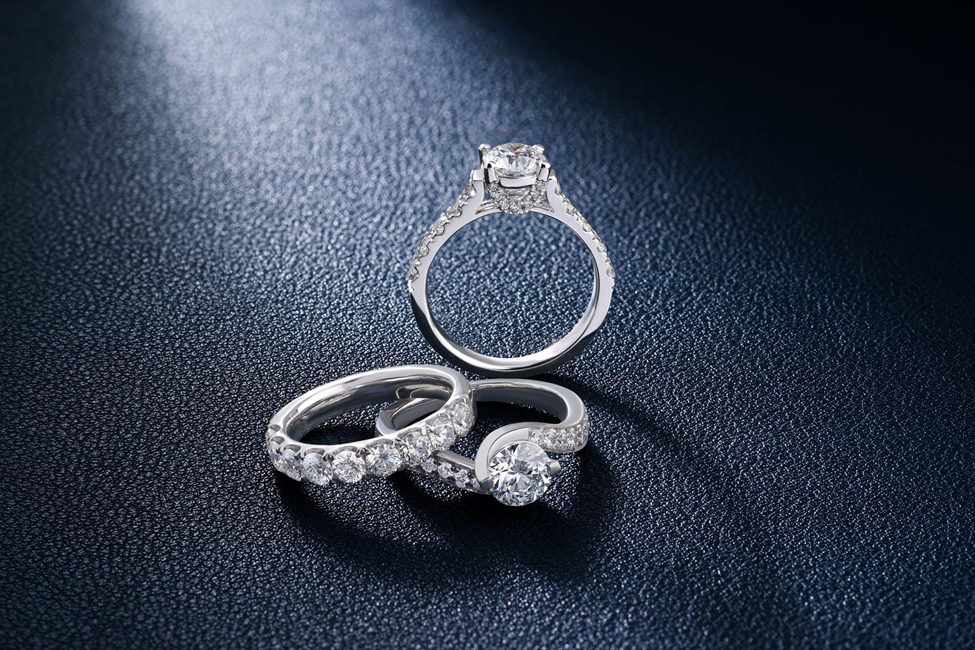
A ring can carry a meaning that extends far beyond its appearance. Across countries and generations, rings have marked engagements, weddings, family connections, and important promises. Yet the customs surrounding them vary widely.
Why are rings exchanged during engagements? Do couples everywhere wear them on the same hand? And when did diamonds become so strongly associated with commitment?
History, religion, local customs, and evolving ideas about marriage shape the answers. Exploring these differences reveals why a simple piece of jewellery can tell a surprisingly rich cultural story.
Why Do Rings Symbolise Love and Commitment?
The circular shape of a ring has long been associated with continuity, as it has no obvious beginning or end. Ancient Roman and Egyptian traditions often used rings to symbolise relationships, though customs and meanings varied considerably.
Over time, rings became associated with agreements and commitments in parts of Europe. The exchange of rings gradually became linked to betrothal and marriage ceremonies, helping to establish traditions that remain familiar today.
Diamonds entered the picture much later. Diamond engagement jewellery became particularly influential in the twentieth century, aided by changing social customs and highly successful jewellery marketing. Today, a diamond can represent durability, rarity and enduring affection, although couples attach their own meanings to the stone.
This history also explains why engagement jewellery differs considerably between countries. No single universal rule governs what an engagement ring should look like or how it should be worn.
How Diamond Rings Differ Across Cultures
In Britain, people commonly wear an engagement ring on the fourth finger of the left hand. This tradition is also common in several other countries, including the United States and Canada.
Other cultures follow different practices. In Germany, Austria and some neighbouring European countries, engagement and wedding rings may be worn on the right hand. The choice can depend on national customs, family traditions and individual preference.
In some countries, couples place greater emphasis on the wedding band than on the engagement ring. Elsewhere, engagement jewellery can be an important part of the proposal itself.
These differences make diamond rings particularly interesting from a cultural perspective. The same type of jewellery can represent a promise in one country, a family tradition in another and a personal milestone somewhere else.
For shoppers comparing styles, diamond rings are available in a range of designs, from classic to contemporary. Chisholm Hunter is a UK jewellery retailer offering diamond jewellery alongside watches and other fine pieces.
Why Is the Fourth Finger So Significant?
One of the most recognisable engagement-ring customs centres on the fourth finger of the left hand. A popular historical explanation links this tradition to the ancient belief that a vein ran directly from this finger to the heart.
Modern anatomy shows this idea is not medically accurate. However, symbolism need not be scientifically correct to become culturally powerful.
The association between the finger and the heart endured because it created a memorable link between physical jewellery and romantic commitment. Over centuries, the custom became established across different societies.
Travel makes these differences especially noticeable. A visitor attending a wedding abroad may see rings exchanged in a way that differs from what they are accustomed to at home. The jewellery may look familiar, while the ceremony surrounding it tells a completely different story.
Diamonds Have Their Own Long History
Diamonds were known and traded long before modern engagement rings became popular. India was an early source of diamonds, and wealthy communities and rulers valued them for centuries.
As new diamond deposits were discovered in other parts of the world, including southern Africa, the international diamond trade expanded considerably. Diamonds eventually became increasingly accessible to jewellery markets in Europe and North America.
Their physical properties also contributed to their appeal. Diamonds are extremely hard, making them attractive for jewellery intended to last for generations. Their ability to reflect and refract light also gives them a distinctive appearance.
However, a diamond’s meaning is cultural rather than purely physical. A stone does not automatically represent love or commitment. Those associations developed through history, social traditions and personal experiences.
How Proposals Reflect Local Traditions
The proposal itself can be as culturally varied as the ring.
Some couples follow the familiar tradition of one partner presenting an engagement ring when proposing. Others involve both partners in choosing or exchanging rings. In some families, relatives may play a significant role in the engagement process.
Religious and regional customs can also influence how jewellery is presented. Some couples may prefer a private proposal, while others incorporate family gatherings or formal celebrations.
Travel exposes people to these different approaches. A couple visiting another country may even incorporate elements of a local tradition into their own engagement, particularly if the destination has personal significance.
This is one reason jewellery often becomes associated with memorable places. A ring purchased during a holiday, presented beside a famous landmark, or selected during a special trip can carry an additional personal story.
Family Traditions Can Shape Ring Choices
Cultural customs are only part of the story. Family traditions can influence jewellery choices just as strongly.
Some families pass engagement rings down the generations. An inherited ring may have modest specifications but carry considerable emotional value because of its history.
Other couples prefer a new ring that reflects their own taste. They may choose a traditional solitaire, a halo setting, a three-stone design, or a style that combines several stones.
No single choice makes a ring more meaningful. Its importance often stems from the circumstances surrounding it and the person who wears it.
This is also why shoppers should consider personal style alongside established traditions. A ring may follow a familiar cultural convention while still reflecting an individual’s preferences.
What Can Travellers Learn From Engagement Traditions?
Engagement customs offer a useful way to understand how societies express relationships and family values.
In some places, jewellery is strongly associated with the couple, while in others the wider family may be more involved. The timing of an engagement, the exchange of gifts and the role of the ring can all differ.
These customs also show how traditions evolve. Younger couples may retain familiar symbols while adapting them to suit modern relationships. Some choose rings together, while others reject traditional proposals altogether.
Social media and international travel have also exposed couples to customs from different countries. A proposal style once associated with a particular region can quickly become familiar elsewhere.
As a result, modern engagement traditions often blend local customs with international influences.
Choosing a Ring With Meaning
For couples shopping for an engagement ring, cultural traditions can inspire without dictating the final decision.
Start by considering what the ring should represent. Some people value a classic look, while others prefer a design linked to a particular memory, destination or family tradition.
Practical details matter too. The stone’s cut, setting, metal and overall design affect how the ring looks and feels when worn. Consider your budget before you buy.
Most importantly, the ring should make sense for the person who will wear it. Cultural traditions can provide useful context, but personal meaning is what ultimately turns jewellery into a lasting keepsake.
One Ring, Many Meanings
Diamond engagement rings may be recognised worldwide, but their significance varies by place. The finger they are worn on, how they are presented, and the traditions surrounding them can all differ.
That variety is what makes engagement jewellery so fascinating. A ring can connect ancient beliefs with modern relationships, international history with family traditions, and a memorable journey with a personal milestone.
For travellers and jewellery enthusiasts alike, these customs remind us that familiar objects can mean very different things across cultures. Behind every ring is a story, and sometimes the most interesting part is discovering where that story began.


Bookkeeping Errors That Trigger HMRC VAT Return Queries
Hiring Your First Employee: A Payroll Checklist for UK Small Businesses

Sorting Out Theboringmagazine Com From Its Lookalike Domains

Who Is William Lancelot Bowles Jr.? The Intriguing Untold Tale of Phylicia Rashad’s Ex-Husband

Who Is Chanelle Haynes? The Fascinating True Story of Cornell Haynes III’s Sister

The Inspiring Story of Kelly Davis Rucker: From Struggle to Success
-
 Celebrity4 months ago
Who Is William Lancelot Bowles Jr.? The Intriguing Untold Tale of Phylicia Rashad’s Ex-Husband
-
 Celebrity4 months ago
Who Is Chanelle Haynes? The Fascinating True Story of Cornell Haynes III’s Sister
-
 Celebrity4 months ago
The Inspiring Story of Kelly Davis Rucker: From Struggle to Success
-

 Technology2 months ago
Voozon.com Review: Is It Legit? Features, Benefits, and What to Know
-

 Celebrity2 months ago
Who Is Dallas Yocum? The Fascinating Life Story of Mike Lindell’s Ex-Wife
-

 Celebrity2 months ago
Who Is Noah Wilde West? Everything to Know About Chyler Leigh’s Son
-

 Blog2 months ago
Who Is Cassandra Jade Estevez? The Captivating Life Behind Casey Huffman Wife
-

 Business2 months ago
UploadArticle.com Review: Is It the Best Free Platform to Upload Articles?