
Travel
Marine Engines Run Hard and Sit Still

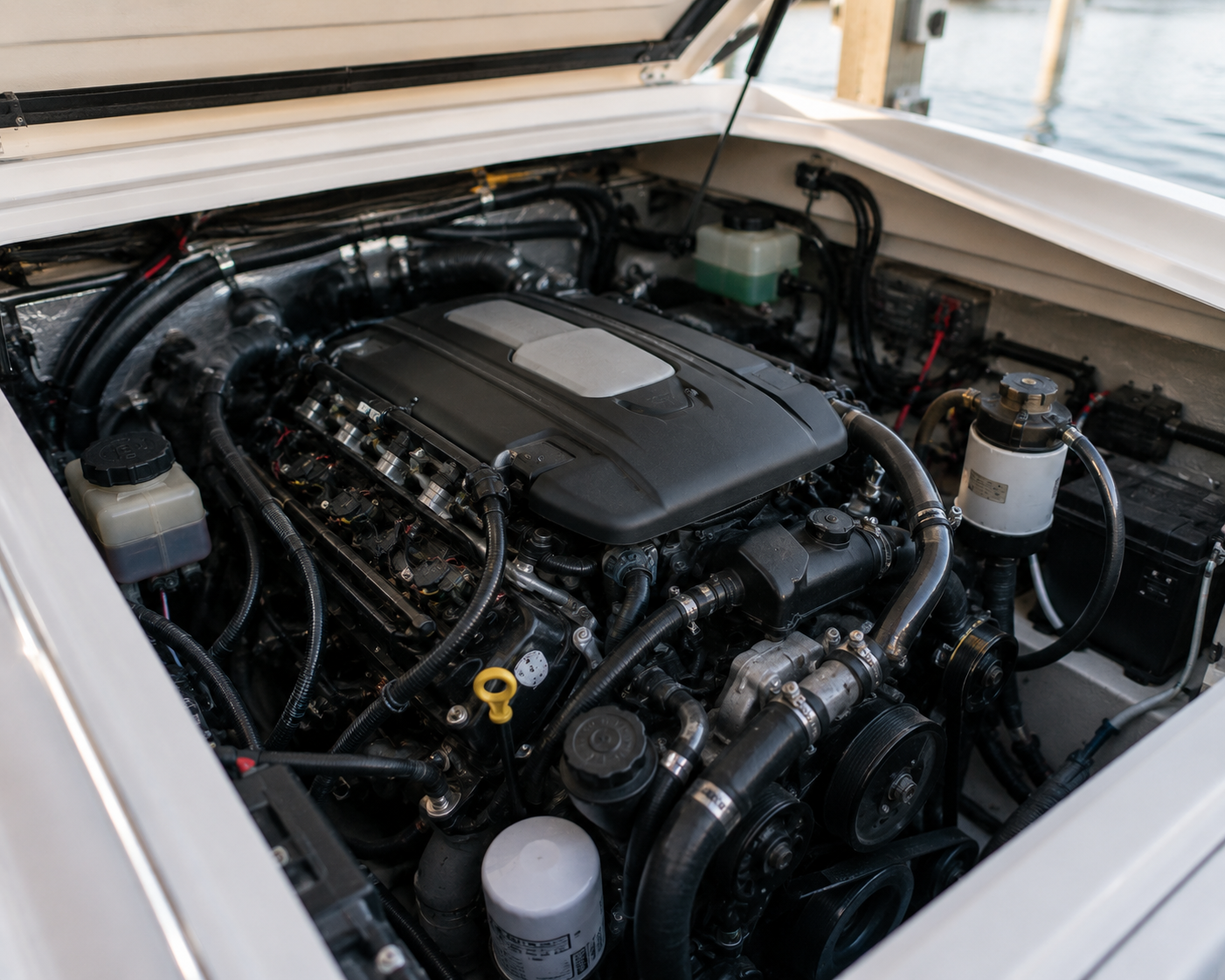
A boat engine lives a strange double life. For a few hours at a time it works close to full throttle, pushing a heavy hull through water that never stops resisting, and then for weeks or whole seasons it sits untouched at a dock or on a trailer. Those two extremes, hard use and long stillness, are each rough on the fuel system, and the injectors sit right in the middle of it.
A Car Coasts, a Boat Cannot
Most of a car’s life is spent at light load, cruising at a small fraction of what the engine can do. A boat has no coasting. Water resistance climbs steeply with speed, so a marine engine often runs at high sustained load for long stretches, sometimes most of a trip. That constant demand means the injectors are delivering large, steady amounts of fuel for hours rather than sipping through stop and go traffic. A car injector that is slightly off might never be noticed. The same fault on a hard working marine engine shows up as poor performance, rough running, or a stall far from shore.
The Off Season Is the Real Threat
The bigger enemy is time. Fuel left sitting in a tank degrades, and modern gasoline blended with ethanol makes it worse on the water. Ethanol draws moisture, and in a vented marine tank sitting through a humid off season it can absorb enough water to separate, leaving a corrosive layer at the bottom of the tank and a weakened fuel above it. Suppliers that carry Marine Fuel Injectors flow test and match units for these conditions, since a boat gives fuel trouble more time and more load to develop than a car does. As that fuel ages it forms gum and varnish that settle in the fine passages of an injector, distorting the spray or partly clogging it. A boat that ran fine in the fall can crank poorly in spring for exactly this reason.
Marine Parts Are Held to a Different Standard
There is also a safety line separating marine components from automotive ones. A boat’s engine sits in an enclosed space where fuel vapours can collect, so marine electrical parts are built to a stricter ignition protected standard so they cannot set off those vapours. That is one reason a car injector is not a drop in answer for a boat, along with different calibration for the engine’s fuel needs. Marine injectors are made to the correct specification for that setting, which matters more here than it does on land.
Keeping the Fuel Side Reliable
A few habits keep injectors healthy through the cycle of hard use and long rest:
- Treating or stabilizing fuel before any extended layup
- Keeping water out of the tank and the fuel fresh
- Flow testing or replacing injectors as a matched set when performance drops
- Matching any replacement to the engine’s marine specification, not a car equivalent
Parts specialists who handle marine fuel components tend to stock OEM and remanufactured injectors matched to specific marine engines, which is what keeps a boat starting and running when it is hours from the nearest ramp.
A boat asks its engine to work harder than a car ever does, then leaves it sitting far longer. The fuel system carries both burdens, and the injectors are usually the first place the strain shows.


SCADA Cybersecurity Best Practices for Industrial Facilities

What Glaadvoice Com Really Is and Who Stands Behind It

What Sparkpressfusion Com Shows About Its Own Team and Claims

Who Is William Lancelot Bowles Jr.? The Intriguing Untold Tale of Phylicia Rashad’s Ex-Husband

Who Is Chanelle Haynes? The Fascinating True Story of Cornell Haynes III’s Sister

The Inspiring Story of Kelly Davis Rucker: From Struggle to Success
-
 Celebrity4 months ago
Who Is William Lancelot Bowles Jr.? The Intriguing Untold Tale of Phylicia Rashad’s Ex-Husband
-
 Celebrity4 months ago
Who Is Chanelle Haynes? The Fascinating True Story of Cornell Haynes III’s Sister
-
 Celebrity4 months ago
The Inspiring Story of Kelly Davis Rucker: From Struggle to Success
-

 Technology2 months ago
Voozon.com Review: Is It Legit? Features, Benefits, and What to Know
-

 Celebrity2 months ago
Who Is Dallas Yocum? The Fascinating Life Story of Mike Lindell’s Ex-Wife
-

 Celebrity2 months ago
Who Is Noah Wilde West? Everything to Know About Chyler Leigh’s Son
-

 Business2 months ago
UploadArticle.com Review: Is It the Best Free Platform to Upload Articles?
-

 Blog2 months ago
Who Is Cassandra Jade Estevez? The Captivating Life Behind Casey Huffman Wife