
Blog
Assimilasjon: What This Term Means in Psychology, Culture, and Language

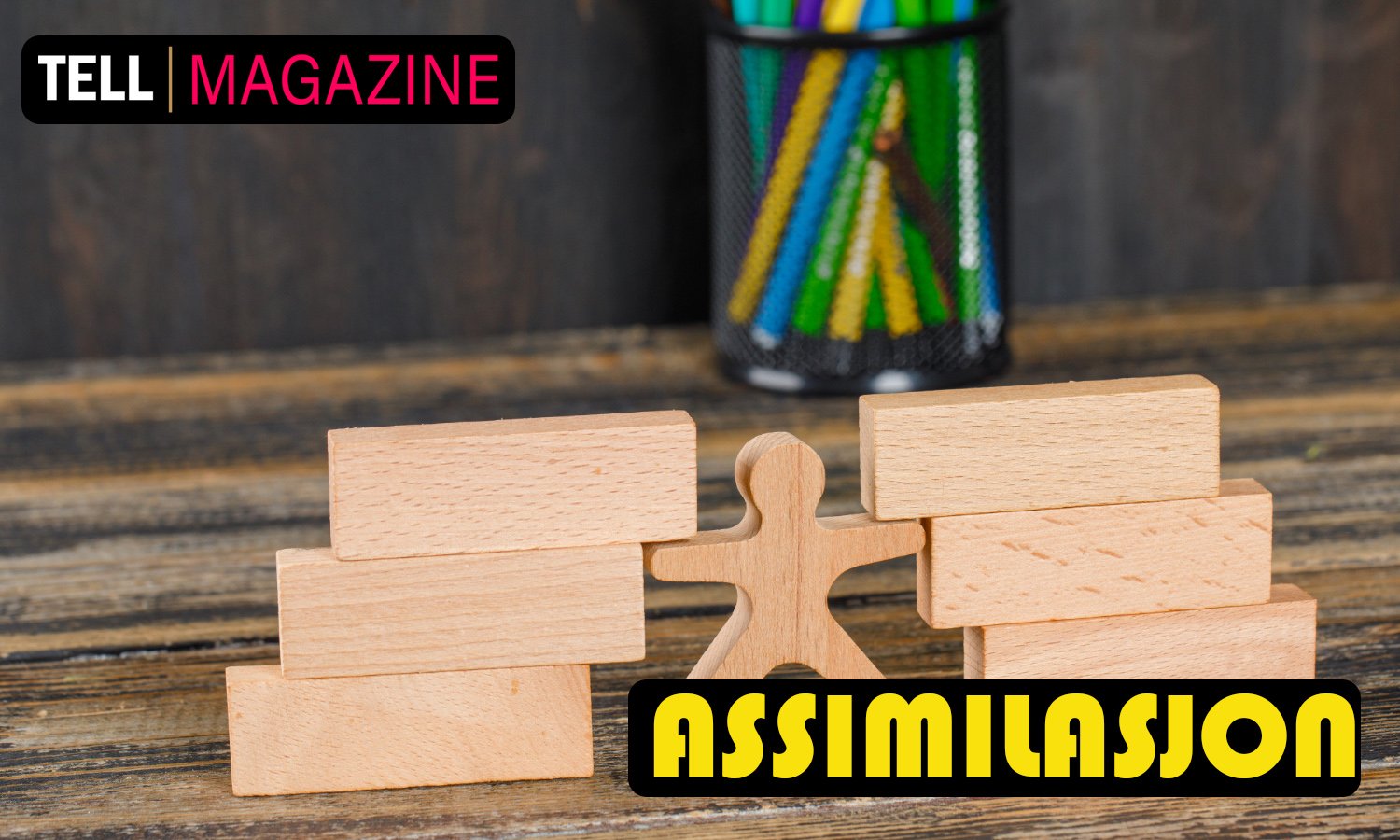
Assimilasjon is the Norwegian word for assimilation, a concept used across psychology, education, sociology, and linguistics to describe how new information, people, or elements are absorbed and integrated into an existing structure or system. The term appears most prominently in developmental psychology, where it describes a specific cognitive process, but it also carries important meaning in cultural and social contexts, where it describes how individuals or groups adapt to a new society. This article explains what assimilasjon means across these different contexts, why the concept matters, and how it relates to closely connected ideas like accommodation and integration.
What Does Assimilasjon Mean?
At its core, assimilasjon describes a process of absorption and integration, where something new is taken in and incorporated into an existing framework, whether that framework is a person’s cognitive understanding, a cultural identity, or a linguistic system. The specific meaning shifts depending on the field applying it, but the underlying idea, fitting new material into an existing structure rather than creating an entirely separate one, remains consistent across contexts.
What Is Assimilation in Piaget’s Theory of Cognitive Development?
The most well-established academic use of assimilation comes from Swiss psychologist Jean Piaget’s theory of cognitive development, where assimilation describes the process by which a person incorporates new information or experiences into their existing mental frameworks, called schemas, without fundamentally changing those frameworks.
How Assimilation Works in Practice
According to Piaget, when a child encounters something new, they first try to understand it using schemas they already have. A young child who has learned the schema for “dog” might initially call any four-legged animal a dog, including a cat, because the new animal fits reasonably well into the existing category without requiring the child to build an entirely new mental structure.
How Assimilation Differs From Accommodation
Piaget paired assimilation with a second, complementary process called accommodation, which occurs when existing schemas cannot adequately explain new information, requiring the person to modify or create a new schema instead. Using the earlier example, a child eventually learns that cats and dogs are different, requiring them to accommodate their understanding by creating a distinct schema for each animal, rather than continuing to assimilate all four-legged animals into a single category. Piaget viewed the interplay between assimilation and accommodation as the core mechanism driving cognitive development throughout childhood.
What Is Cultural or Social Assimilation?
Beyond its psychological meaning, assimilation, and its Norwegian equivalent assimilasjon, also describes a social and cultural process, where individuals or groups from one cultural or ethnic background adopt the language, customs, values, and social norms of a dominant or host society, often over the course of one or more generations.
Assimilation Versus Integration
Social scientists commonly distinguish assimilation, which implies a fuller adoption of a host culture’s norms, sometimes at the expense of an original cultural identity, from integration, which describes a process where a person or group adapts to a new society while retaining significant elements of their original cultural identity. This distinction matters in academic and policy discussions about immigration and multiculturalism, since different countries and communities have historically favored different models along this spectrum.
Linguistic Assimilation
A specific and commonly studied form of cultural assimilation involves language, where immigrant families or communities gradually shift toward using the dominant language of their new society, sometimes across multiple generations, a pattern documented extensively in migration and sociolinguistics research.
Why Is Assimilation Important in Educational and Developmental Contexts?
Understanding assimilation, particularly in its Piagetian sense, has practical importance for educators and parents supporting a child’s cognitive development. Recognizing that a child processes new information by first trying to fit it into existing knowledge helps explain common early learning patterns and mistakes, which are a normal and expected part of cognitive development rather than a sign of confusion or error. Educators who understand the assimilation-accommodation cycle can design learning experiences that intentionally challenge a child’s existing schemas at an appropriate pace, encouraging the accommodation process that leads to more sophisticated understanding over time, rather than simply reinforcing what a child already assumes to be true.
How Does Assimilasjon Apply Outside Psychology and Sociology?
The underlying concept behind assimilasjon extends into several other fields beyond its most prominent psychological and sociological uses. In biology, assimilation describes how an organism absorbs and incorporates nutrients from food into its own tissues and cellular structures, a distinct but conceptually related use of the same core idea of absorption and integration. In linguistics more broadly, beyond the specific case of language shift among immigrant communities, assimilation also describes a phonetic process where a sound changes to become more similar to a neighboring sound, a pattern found across many of the world’s languages during natural speech.
What Are Common Misunderstandings About Assimilation?
A few misunderstandings recur across discussions of assimilation, whether in its psychological or cultural sense.
Assimilation Is Not Always a Conscious Choice
In Piaget’s framework particularly, assimilation is an automatic cognitive process that happens continuously as people encounter new information, not a deliberate decision a person consciously makes. Cultural assimilation, while it can involve conscious choices, also often occurs gradually and partly unconsciously across generations, rather than through a single deliberate act.
Assimilation Is Not the Same as Erasure
In cultural discussions, assimilation is sometimes conflated with the complete loss or erasure of an original cultural identity, but many social scientists treat assimilation as existing along a spectrum, where a person or group can adopt significant elements of a new culture while still retaining some connection to their original identity, even if that connection differs from a fuller model of integration.
Assimilation and Accommodation Are Complementary, Not Opposed
Within Piaget’s theory specifically, assimilation and accommodation are not competing or contradictory processes but two halves of the same adaptive mechanism, working together continuously as a person’s understanding of the world develops and becomes more refined over time.
How Is Assimilasjon Discussed in Norwegian and Scandinavian Contexts?
Given that assimilasjon is the direct Norwegian term for assimilation, the concept appears in Norwegian academic, educational, and policy discussions in much the same way it does in English-language contexts, spanning psychological development, immigration and integration policy, and linguistic change. Scandinavian countries, including Norway, have engaged extensively with the assimilation-versus-integration distinction in their own immigration and social policy debates, similar to broader European and North American discussions on the same topic, reflecting how a single translated term can carry the same layered, multi-field meaning across different languages.
How Do Researchers Study Cultural Assimilation Over Time?
Sociologists and demographers typically study cultural assimilation by tracking measurable indicators across generations within immigrant communities, rather than relying on subjective impressions of how “assimilated” a group appears. Common indicators include rates of intermarriage between immigrant and host-society populations, language use patterns within the home across first, second, and third generations, residential patterns showing whether a community remains concentrated or disperses geographically over time, and socioeconomic indicators such as educational attainment and income relative to the broader host population. This kind of longitudinal research allows researchers to compare assimilation patterns across different immigrant groups, time periods, and host countries, revealing that the pace and degree of assimilation can vary considerably depending on factors such as immigration policy, economic opportunity, and the size and cohesion of an immigrant community itself.
What Is the Difference Between Assimilation and Acculturation?
Alongside integration, another closely related term often discussed alongside assimilation is acculturation, which describes the broader process of cultural exchange and change that occurs when groups from different cultures come into sustained contact with one another. Acculturation is a broader umbrella term that can describe several different outcomes, including assimilation, where one culture largely adopts the other’s norms, but also separation, where a group maintains its original culture with minimal adoption of the host culture, and integration, where elements of both cultures are retained and blended. Understanding assimilation as one possible outcome within this broader acculturation framework, rather than as a synonym for all cross-cultural contact and change, helps clarify how these related but distinct terms fit together in academic discussions.
Why Does the Assimilation-Accommodation Framework Still Matter in Modern Education?
Despite being developed decades ago, Piaget’s assimilation-accommodation framework remains widely referenced in modern educational psychology and teacher training programs. Contemporary constructivist teaching approaches, which emphasize students actively building their own understanding rather than passively receiving information, draw directly on Piaget’s core insight that learning happens through this continuous cycle of fitting new information into existing knowledge and periodically restructuring that knowledge when it no longer fits. Modern applications extend this thinking into curriculum design, where educators deliberately sequence lessons to first activate a student’s existing schemas before introducing information that will require some degree of accommodation, aiming to create productive cognitive challenge rather than either excessive repetition of known material or overwhelming unfamiliarity that a student cannot connect to anything they already understand.
How Should Students and Readers Approach Definitions of Assimilasjon Found Online?
Because assimilasjon carries genuinely different meanings depending on the field applying it, readers researching the term online benefit from first identifying which context a given source is discussing before applying its definition elsewhere. A definition drawn from a developmental psychology textbook describing Piaget’s schema-based process will not transfer accurately to a sociology discussion about immigrant communities, even though both uses share the same underlying root concept of absorption and integration. Checking whether a source specifies its field, psychology, sociology, linguistics, or biology, is a quick and reliable way to avoid applying a definition outside the context it was actually meant to describe, particularly for students encountering the term for the first time in a course that assumes a single, field-specific meaning.
Conclusion
Assimilasjon, the Norwegian word for assimilation, describes a process of absorption and integration that appears across multiple academic fields, most prominently in Piaget’s theory of cognitive development, where it describes how new information fits into existing mental schemas, and in sociology, where it describes how individuals or groups adopt a new society’s cultural and linguistic norms. Understanding the distinctions between assimilation and its related concepts, accommodation in psychology and integration in social contexts, helps clarify what can otherwise be a confusingly broad term applied across very different fields. Whether encountered in an education course, a sociology discussion, or a Scandinavian-language context, assimilasjon consistently points back to this same core idea of new material being taken in and made part of an existing structure.
Frequently Asked Questions
What does assimilasjon mean?
Assimilasjon is the Norwegian word for assimilation, a concept describing how new information, people, or elements are absorbed and integrated into an existing psychological, cultural, or linguistic structure.
What is assimilation in Piaget’s theory of child development?
In Piaget’s theory, assimilation is the process of incorporating new information into existing mental schemas without changing them, paired with accommodation, which modifies or creates new schemas when existing ones cannot explain new information.
How does cultural assimilation differ from integration?
Cultural assimilation generally implies a fuller adoption of a host society’s norms and language, while integration describes adapting to a new society while retaining significant elements of one’s original cultural identity.
Is assimilation the same as losing one’s original culture?
Not necessarily. Many social scientists view assimilation as existing along a spectrum, where a person or group can adopt substantial elements of a new culture while still retaining some connection to their original cultural identity.
Does assimilation apply outside psychology and sociology?
Yes. Assimilation also describes processes in biology, where organisms absorb nutrients into their tissues, and in linguistics, where a speech sound shifts to become more similar to a neighboring sound.


Who Was Vivian Ridge? The Devoted Life Story of Bob Ross’s First Wife

Who Is Elaine Starchuk? The Resilient Life Story of Tommy Lee’s First Wife

Who Is Donna Joan Shaffer-Ackles? The Devoted Life Story of Jensen Ackles’s Mother

Who Is William Lancelot Bowles Jr.? The Intriguing Untold Tale of Phylicia Rashad’s Ex-Husband

The Inspiring Story of Kelly Davis Rucker: From Struggle to Success

Voozon.com Review: Is It Legit? Features, Benefits, and What to Know
-
 Celebrity3 months ago
Who Is William Lancelot Bowles Jr.? The Intriguing Untold Tale of Phylicia Rashad’s Ex-Husband
-
 Celebrity3 months ago
The Inspiring Story of Kelly Davis Rucker: From Struggle to Success
-
 Technology3 weeks ago
Voozon.com Review: Is It Legit? Features, Benefits, and What to Know
-

 Celebrity3 months ago
Who Is Ella Sofia Gordon? The Incredible Story Behind Jeff Gordon’s Daughter
-

 Celebrity2 months ago
Who Is Chanelle Haynes? The Fascinating True Story of Cornell Haynes III’s Sister
-

 Celebrity3 months ago
Who Is Iona McKidd? The Hidden Brilliance of Kevin McKidd’s Daughter
-

 Celebrity3 months ago
Who Is Simone Cruickshank Rivera? The Inspiring Journey of Geraldo Rivera’s Daughter
-

 Business3 weeks ago
UploadArticle.com Review: Is It the Best Free Platform to Upload Articles?