
Business
Quartz Events Sponsor Matching Companies: A Complete Guide for 2026

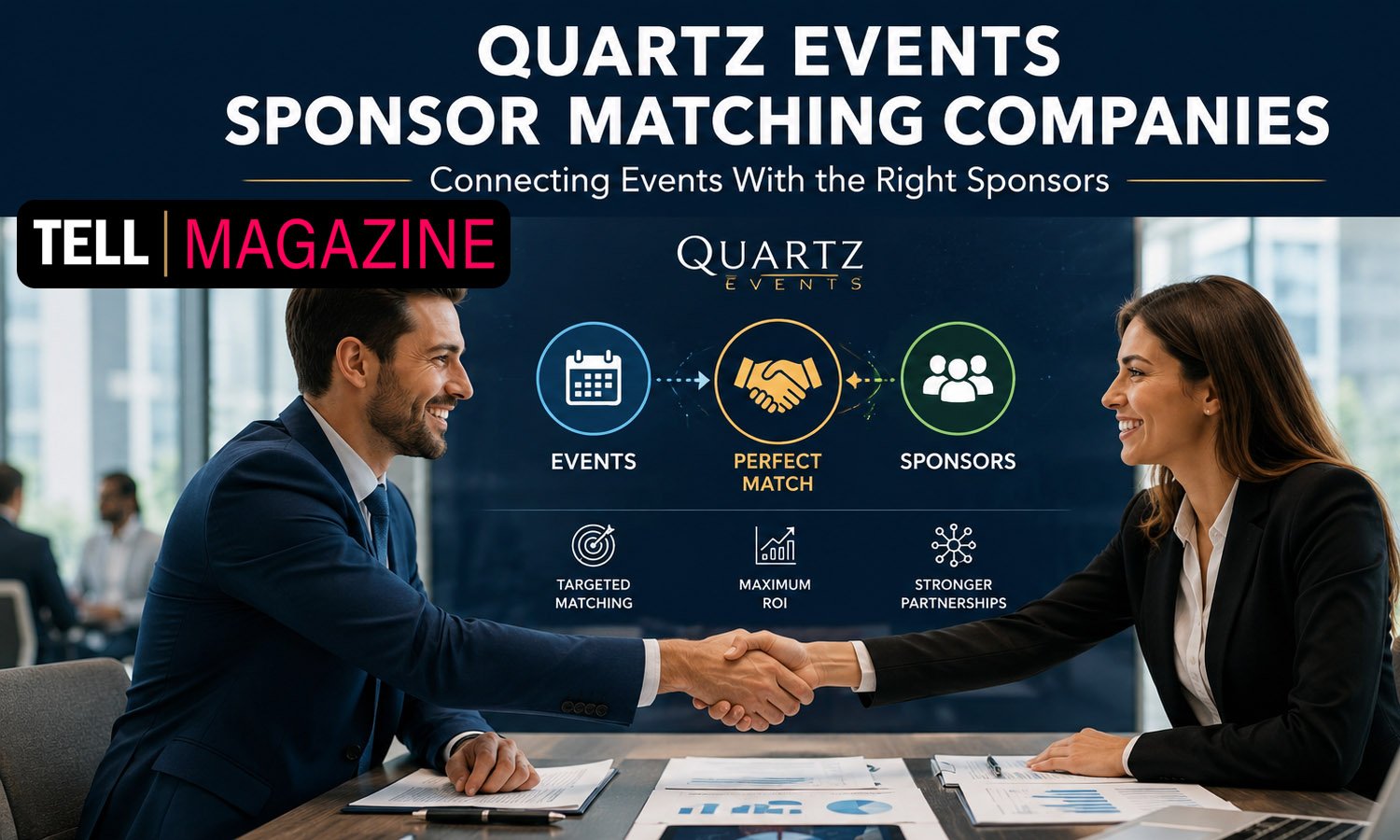
Quartz Events sponsor matching companies are businesses and platforms that connect B2B solution providers with senior corporate decision-makers through carefully arranged, pre-qualified meetings rather than traditional exhibition-style sponsorship. Instead of paying for a booth and hoping the right buyer walks past, sponsors pay for guaranteed introductions to executives who have already been matched to their offering based on stated business challenges, budget authority, and buying timeline. This approach has become one of the fastest-growing models in B2B event marketing, and it matters because it directly affects how much return a sponsor sees on its marketing spend.
If you are researching sponsorship options for 2026, or trying to understand what makes the Quartz Events model different from a standard trade show, this guide covers everything you need: how the matching process works, who the model suits, what sponsors actually receive, how it compares with alternatives, and how to decide whether it fits your go-to-market strategy.
Bio Table: Quartz Events Sponsor Matching Model
| Field | Details |
|---|---|
| Topic Name | Quartz Events Sponsor Matching |
| Category | B2B Event Marketing and Sponsorship |
| Origin | Developed as an alternative to traditional exhibition-style event sponsorship |
| Core Mechanism | Matches sponsors with pre-vetted senior executives based on business challenges |
| Typical Sponsors | Software companies, consultancies, technology vendors, agencies |
| Typical Attendees | CFOs, CHROs, CMOs, CIOs, and other senior functional leaders |
| Meeting Format | Pre-scheduled, one-on-one, double opt-in meetings |
| Guaranteed Meetings | Commonly ranges from around 15 to 120 per sponsorship package |
| Key Benefit | Higher-quality, pre-qualified sales conversations |
| Main Limitation | Higher cost compared with standard booth sponsorship |
| Best Suited For | Businesses with a clearly defined B2B buyer profile |
What Are Quartz Events Sponsor Matching Companies?
Quartz Events sponsor matching companies are organisations that use qualification data, executive vetting, and structured scheduling to pair sponsors with the senior buyers most likely to have a genuine need for their product or service. The best-known example is Quartz Network, which runs invitation-only executive summits built around specific job functions such as HR, finance, marketing, supply chain, IT, and operations.
Rather than opening registration to anyone who buys a ticket, this model works from the attendee side first. Executives are recruited or invited directly, then vetted for seniority, budget authority, and relevant responsibilities before they are allowed to attend. Sponsors are then matched to those executives based on the business challenges each attendee has reported.
This is a meaningful shift from how sponsorship has traditionally worked. A conventional conference sponsorship typically includes a logo on event materials, a booth in an exhibition hall, and general access to a list of attendees. The sponsor is responsible for attracting foot traffic and starting conversations cold. A sponsor-matching model removes that uncertainty by pre-arranging the meetings themselves.
How the Sponsor Matching Process Actually Works
Understanding the mechanics of sponsor matching helps explain why sponsors are willing to pay a premium for it compared with standard exhibition space.
Step 1: Sponsor Onboarding and Targeting
The process usually begins when a solution provider talks to the event organiser about sponsorship packages. During onboarding, the organiser gathers details on the sponsor’s ideal customer profile, including:
- Target job titles and functions (for example, Chief Financial Officer or VP of Supply Chain)
- Company size and industry
- Geographic focus
- Specific business problems the sponsor’s product or service solves
This information forms the criteria the matching engine will use later in the process.
Step 2: Executive Recruitment and Vetting
On the other side of the model, the organiser recruits senior executives to attend. These attendees typically apply or are invited based on their role, seniority, and current business priorities. Before the event, the organiser collects structured data on each attendee, including their responsibilities, active projects, and challenges they are trying to solve.
Step 3: Matching and Double Opt-In
Once both data sets exist, sponsors and executives are cross-referenced. If a Vice President of Supply Chain reports difficulty with last-mile delivery tracking, for instance, and a sponsor offers a delivery-tracking platform, the system flags them as a potential match.
Many programmes use a double opt-in approach: sponsors receive a shortlist of matched executives along with relevant background information, and they choose which meetings they want to prioritise. Executives, in turn, indicate which sponsors they are open to meeting before the event takes place. This two-way filtering is what separates genuine matching from a simple attendee directory.
Step 4: Scheduled One-on-One Meetings
At the event itself, meetings are pre-scheduled rather than left to chance. Sponsorship packages commonly guarantee a set number of meetings, often ranging from around 15 to 120, depending on the package tier and event size. Sponsors arrive with a calendar of confirmed conversations rather than an unstructured expo floor.
Why This Model Exists: The Problem With Traditional Sponsorship
Traditional event sponsorship sells visibility. A company pays for a booth, a banner, or a slide in a presentation deck, and success depends heavily on how many relevant people happen to notice it. This creates several recurring problems for B2B sponsors:
- Low conversion from foot traffic. Many booth visitors are competitors, students, or people outside the buying process.
- No guarantee of seniority. Attendee lists often include a wide range of job levels, many without purchasing authority.
- Wasted sales time. Sales teams spend event days on unqualified conversations instead of high-value prospects.
- Difficult ROI measurement. It is hard to tie booth visits directly to closed revenue.
Sponsor matching directly addresses each of these issues by guaranteeing that every meeting involves a pre-qualified, relevant decision-maker.
Who Uses This Model?
Sponsors
Typical sponsors include software companies, consultancies, technology vendors, agencies, and service providers that sell into large organisations. Because the model depends on matching specific business problems to specific solutions, it works best for companies with a clearly defined product and a well-understood buyer profile.
Attendees
Attendees are usually senior functional leaders such as CFOs, CHROs, CMOs, CIOs, and supply chain executives. Their participation is generally free or heavily subsidised, since the event’s revenue comes primarily from sponsorship rather than ticket sales. In exchange, they receive curated meetings relevant to problems they are already trying to solve, along with access to educational sessions and networking.
Benefits of the Quartz Events Sponsor Matching Model
1. Higher-Quality Conversations
Because meetings are matched around specific business challenges rather than general interest, sponsors typically spend their time speaking with people who have a real reason to engage.
2. Predictable Meeting Volume
Unlike a booth, where foot traffic can vary wildly, a matching-based sponsorship guarantees a defined number of meetings. This makes it far easier to forecast and measure return on investment.
3. Pre-Meeting Intelligence
Sponsors typically receive background information on each matched executive before the meeting, including their role, company, and stated challenges. This allows sales teams to prepare a tailored conversation instead of starting from scratch.
4. Access to Senior Decision-Makers
Because attendees are vetted for seniority before the event, sponsors are more likely to be speaking directly with someone who has budget authority or strong internal influence.
5. Reduced Sales Cycle Friction
A qualified introduction at an event can shorten the early stages of a sales cycle, since much of the initial discovery work has already been done through the matching process.
Potential Drawbacks and Limitations
No sponsorship model is perfect, and it is worth understanding the trade-offs before committing budget.
- Cost. Guaranteed, qualified meetings typically cost more per sponsorship package than a standard exhibition booth.
- Dependence on data quality. The value of any match is only as good as the accuracy of the information collected from both sponsors and attendees.
- Narrower reach. Because the model prioritises quality over quantity, sponsors meet fewer people overall compared with an open-floor conference.
- Fit matters. Businesses without a clearly defined buyer profile or a well-understood value proposition may struggle to get strong matches.
How to Evaluate a Sponsor Matching Company
If you are comparing Quartz Events against other sponsor matching providers, consider the following criteria.
Quality of Attendee Vetting
Ask how attendees are recruited and verified. A credible provider should be able to explain how it confirms job titles, seniority, and purchasing authority rather than relying on self-reported information alone.
Transparency of the Matching Criteria
Understand exactly what data is used to create a match. Providers should be able to explain how sponsor criteria and attendee challenges are cross-referenced.
Guaranteed Meeting Numbers
Check whether the sponsorship package includes a specific, contractually guaranteed number of meetings, and what happens if that number is not met.
Pre- and Post-Event Support
Strong providers typically offer pre-event briefing materials on matched attendees and post-event reporting to help sponsors measure results.
Industry and Function Fit
Confirm that the events cover the specific functions and industries relevant to your target buyer. A generalist event may produce weaker matches than one built specifically around your buyer’s role.
Pricing Structure
Sponsorship pricing can vary considerably depending on the number of guaranteed meetings, the seniority of attendees, and the event format. Request a clear breakdown of what is included before committing.
Sponsor Matching vs Traditional Exhibition Sponsorship
| Feature | Sponsor Matching Model | Traditional Exhibition Sponsorship |
|---|---|---|
| Meeting structure | Pre-scheduled, guaranteed meetings | Unstructured booth visits |
| Attendee vetting | Executives pre-qualified by role and challenge | Open registration, mixed seniority |
| Sponsor preparation | Background data provided before meetings | Little to no prior information |
| Cost predictability | Fixed package tied to guaranteed outcomes | Variable, dependent on foot traffic |
| Best suited for | Defined B2B buyer profiles | Broad brand visibility goals |
Frequently Asked Search Intent Questions Answered
Is sponsor matching only relevant for large companies?
No. While many sponsors are established B2B vendors, growing companies with a clearly defined target buyer can also benefit, since the model rewards precision in targeting rather than company size.
How is this different from a sponsorship agency?
A traditional sponsorship agency typically focuses on outreach and negotiation to secure sponsors for an event. A sponsor matching company focuses on connecting existing sponsors with the right individual attendees through structured data and scheduling, which is a more operational, meeting-focused function.
Does the model work for niche industries?
Yes, provided the event covers the relevant function or sector. Because matching relies on specific business challenges, niche industries with well-defined pain points can actually see stronger match quality than broad, general-audience events.
Conclusion
Quartz Events sponsor matching companies represent a shift away from traditional booth-based sponsorship towards a model built on qualified, pre-arranged introductions between solution providers and senior decision-makers. The process works by gathering detailed information from both sponsors and attendees, matching them based on genuine business needs, and confirming meetings through a double opt-in system before the event begins. This delivers clear benefits, including higher-quality conversations, predictable meeting volume, and useful pre-meeting intelligence, though it typically comes at a higher cost and depends heavily on accurate data. For businesses with a well-defined buyer profile, this model can offer a far more efficient route to qualified sales conversations than a standard exhibition sponsorship, making it worth serious consideration for any 2026 event marketing budget.
Frequently Asked Questions
What are Quartz Events sponsor matching companies?
They are organisations that connect B2B solution providers with pre-vetted senior executives through scheduled, matched meetings rather than traditional booth-based sponsorship. The matching process is based on the attendee’s role, responsibilities, and current business challenges.
How does Quartz Events match sponsors with attendees?
The organiser collects data on sponsor targeting criteria and attendee business challenges, then cross-references the two data sets to identify relevant matches. A double opt-in process allows both sponsors and attendees to confirm which meetings they want before the event takes place.
How many meetings do sponsors typically receive?
Sponsorship packages commonly guarantee between 15 and 120 one-on-one meetings, depending on the package tier and the size of the event. The exact number is usually agreed as part of the sponsorship contract.
Is sponsor matching more expensive than traditional sponsorship?
Generally, yes. Because the model guarantees qualified, pre-scheduled meetings rather than general booth visibility, packages tend to cost more per sponsorship than a standard exhibition stand.
Who are the typical attendees at these events?
Attendees are usually senior functional leaders such as CFOs, CHROs, CMOs, and CIOs who are vetted for seniority and relevant responsibilities before being invited to participate.
Stay curious. Stay informed. Stay with Tell Magazine


Who Was Vivian Ridge? The Devoted Life Story of Bob Ross’s First Wife

Who Is Elaine Starchuk? The Resilient Life Story of Tommy Lee’s First Wife

Who Is Donna Joan Shaffer-Ackles? The Devoted Life Story of Jensen Ackles’s Mother

Who Is William Lancelot Bowles Jr.? The Intriguing Untold Tale of Phylicia Rashad’s Ex-Husband

The Inspiring Story of Kelly Davis Rucker: From Struggle to Success

Voozon.com Review: Is It Legit? Features, Benefits, and What to Know
-
 Celebrity3 months ago
Who Is William Lancelot Bowles Jr.? The Intriguing Untold Tale of Phylicia Rashad’s Ex-Husband
-
 Celebrity3 months ago
The Inspiring Story of Kelly Davis Rucker: From Struggle to Success
-
 Technology3 weeks ago
Voozon.com Review: Is It Legit? Features, Benefits, and What to Know
-

 Celebrity3 months ago
Who Is Ella Sofia Gordon? The Incredible Story Behind Jeff Gordon’s Daughter
-

 Celebrity2 months ago
Who Is Chanelle Haynes? The Fascinating True Story of Cornell Haynes III’s Sister
-

 Celebrity3 months ago
Who Is Iona McKidd? The Hidden Brilliance of Kevin McKidd’s Daughter
-
 Celebrity3 months ago
Who Is Simone Cruickshank Rivera? The Inspiring Journey of Geraldo Rivera’s Daughter
-

 Business3 weeks ago
UploadArticle.com Review: Is It the Best Free Platform to Upload Articles?